9th Slovenian Community of Practice Meeting
On 9 June 2026, the Sociomedical Institute at ZRC SAZU organised the 9th meeting of the Slovenian Community of Practice within the SafeHabitus project. This was the second meeting dedicated to discussing the possibilities for adapting the Agricall support model to the Slovenian context.
The Agricall model, which operates in Belgium, provides farmers and their family members with confidential, free, and holistic support. It also connects them with appropriate service providers when they face personal, social, financial, or other difficulties.
While the first meeting focused on presenting the model and identifying key challenges and opportunities related to its transfer, this meeting introduced the first concrete activities undertaken to support its adaptation, as well as preliminary results of a survey examining farmers’ needs for different forms of support.
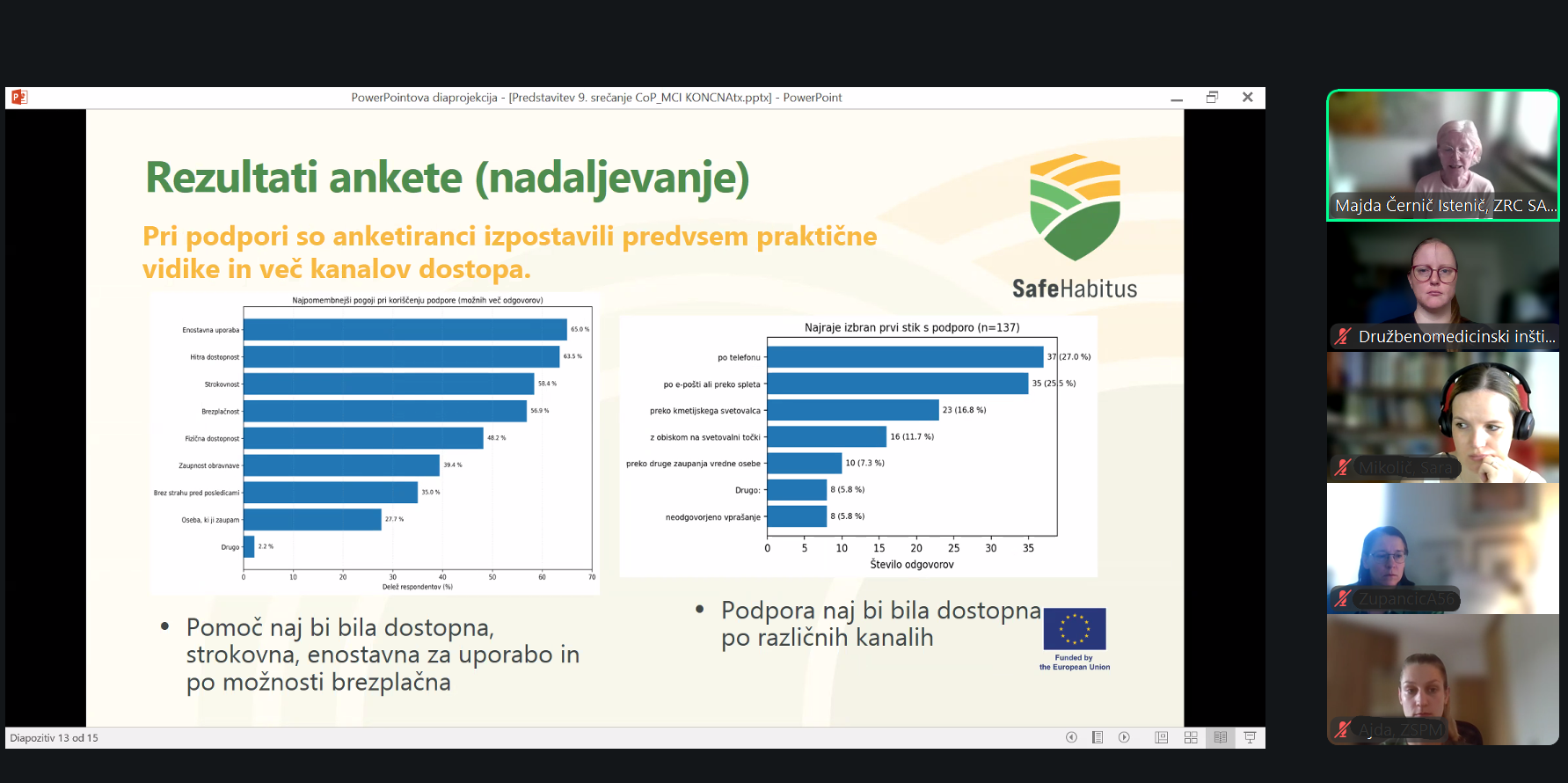
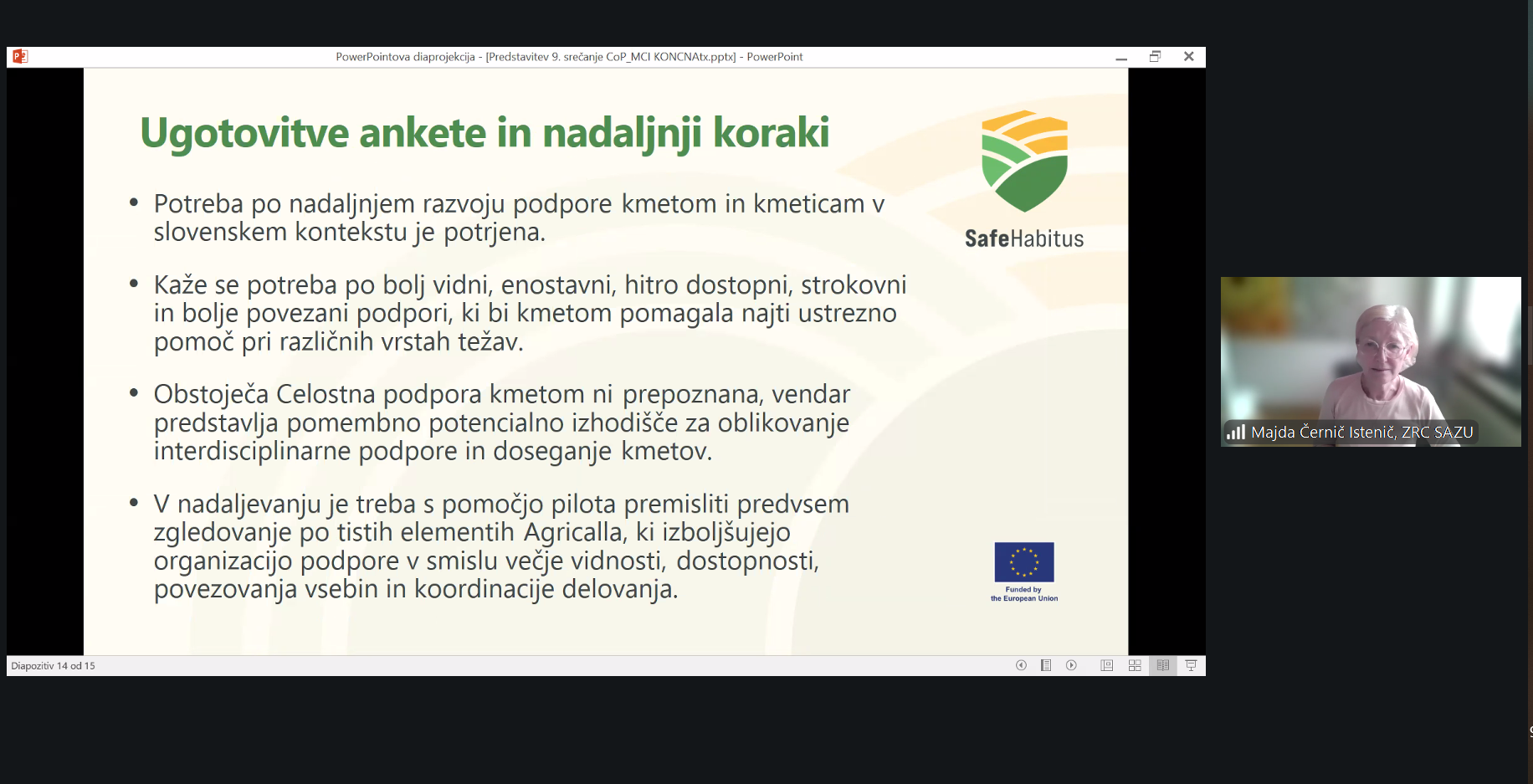
Majda Černič Istenič, coordinator of the Slovenian Community of Practice, presented the activities carried out over the past two months in preparation for the model’s transfer. Among other activities, she met with various stakeholders who could play an important role in promoting the model and helping to achieve its objectives in the future. She also presented preliminary survey findings, which confirmed the need for further development of support services for Slovenian farmers. Respondents highlighted the need for more accessible and better-connected support when dealing with a range of personal and professional challenges. Although the results indicate that the Comprehensive Support for Farmers programme of the Chamber of Agriculture and Forestry of Slovenia (CAFS) is not yet sufficiently recognised among farmers, participants agreed that it provides an important foundation for the further development of interdisciplinary support in agriculture.
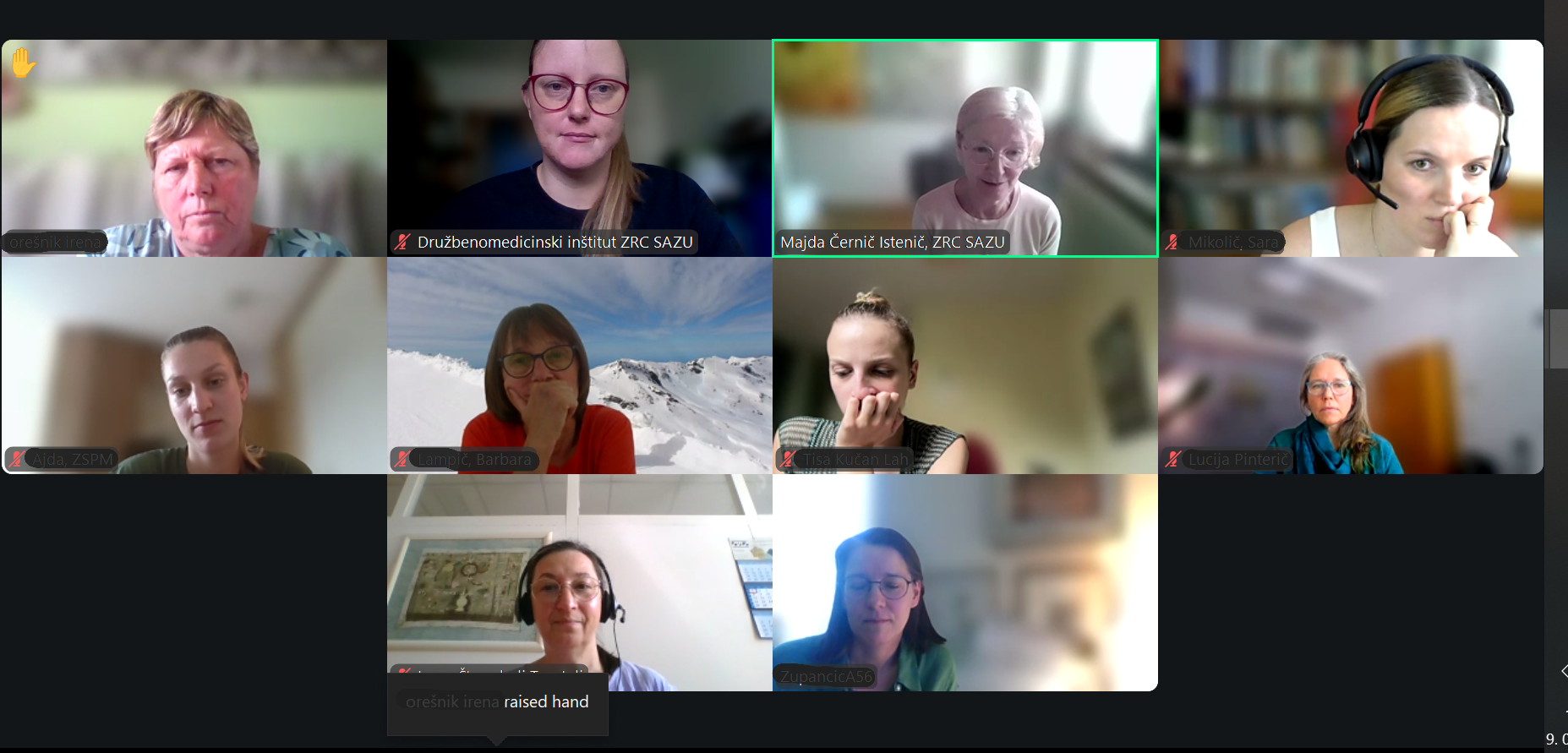
During the discussion, members of the Slovenian Community of Practice proposed initial steps towards the institutional integration of the Agricall model in Slovenia. These included establishing a public-interest non-governmental organisation or a public institution within the framework of the CAFS. Participants also emphasised the need to amend existing legislation in order to secure stable funding for support services at a level that corresponds to the needs identified in the field. They stressed that messages highlighting the importance of transferring the Agricall model should be communicated regularly and as soon as possible to political decision-makers.
Members of the Slovenian Community of Practice come from a wide range of organisations and institutional backgrounds, which represents a significant advantage and a strong potential for further promoting the adaptation of the Agricall model in Slovenia. Their collaboration enables the combination of diverse ideas, knowledge, and experience, all of which will be essential for developing an effective and sustainable support system for Slovenian farmers and their families.